• Skip to main content
  • Skip to primary sidebar
  • Skip to footer

(855) 4MD-BONE (410) 644-1880 Physical Therapy: (443) 478-4449

FOLLOW US

CLINIC ONLINE SCHEDULING BILL PAY PATIENT PORTAL

  • Who We Are
    • Top Doctors
  • Services
    • Areas We Treat
    • Back & Neck
    • Foot & Ankle
    • Diabetic Foot Program
    • Hand & Wrist
    • Hip & Knee
    • Knee Replacement
    • Hip Replacement
    • Shoulder & Elbow
    • Spacer
    • Spacer
    • Spacer
    • Spacer
    • Spacer
    • Additional Services
    • General Orthopedics
    • Arthroscopic Surgery
    • IME
    • Non-Operative Care/Medications
    • Bone Health
    • CBD
    • Durable Medical Equipment
    • ESWT
    • Injections
    • Laser Therapy
    • Orthotics
    • On-Site Imaging
    • Physical Medicine & Rehabilitation
    • Sports Medicine
  • Conditions
    • Arthritis
    • Osteoporosis
    • Scoliosis Care
    • Spinal Stenosis
    • Shoulder Impingement Syndrome
    • Rotator Cuff Tear
    • Achilles Tendon Injuries
    • Plantar Fasciitis
  • Physical Therapy
    • Physical Therapists
    • Pre-Surgery Rehabilitation
    • Post-Surgery Rehabilitation
  • Locations
    • Catonsville – Clinic
    • Catonsville – Physical Therapy
    • Clarksville – Physical Therapy
    • Columbia – Clinic
    • Columbia – Physical Therapy
    • Eldersburg – Clinic
    • Eldersburg – Physical Therapy
    • Ellicott City – Physical Therapy
    • Fulton – Clinic
    • Fulton – Physical Therapy
    • Laurel – Physical Therapy
    • Westminster – Physical Therapy
  • OACM Same Day
  • OACM After Hours
  • Providers
    • Physicians
    • Physical Therapists
    • Physician Assistants
    • Certified Nurse Practitioners
  • OACM News
    • OrthoNews Newsletter
    • Blog
    • Videos
  • Resources
    • Patient Education
    • FAQs
    • Surgery
    • Videos
    • Webinars
    • Podcasts
    • Careers
    • Self-Assessment Tools
    • Pain Assessment
    • Bone Health Assessment
    • –
  • Contact Us
    • Physician Referrals

A How-to Guide on the Proper Way to Use Crutches

August 12, 2016

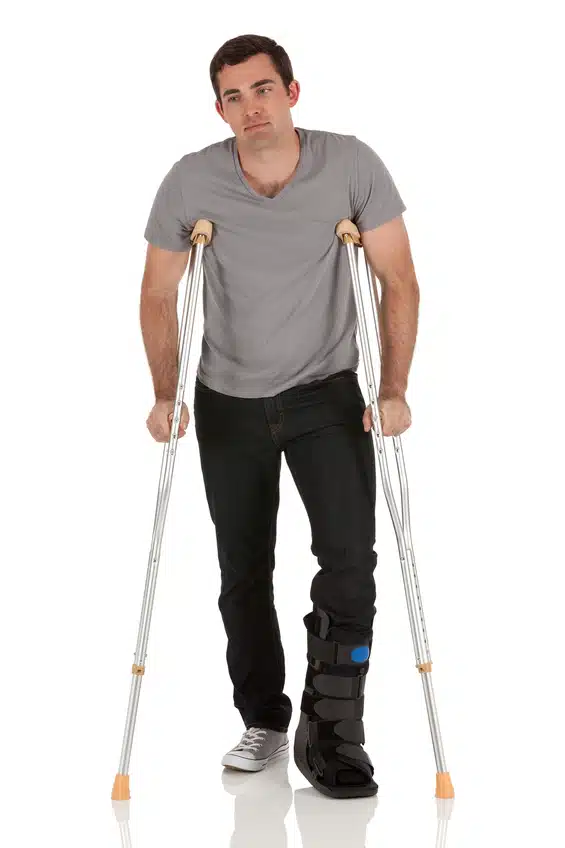
You’ve recently injured your foot or leg. You were probably given a pair of crutches by a doctor or friend with little or no explanation on how to fit or use them. Now, you have been left with a sore back, tired arms, and the struggle of walking.  Unfortunately, there’s nothing you can do about it, as the doctor tells you that you need to remain in a non-weight bearing state while you heal. It might be a real bummer to spend your time not being able to walk normally, but you have to in order to keep your recovery on track.

Crutches are a very useful piece of equipment for many lower limb injuries, however, this piece of equipment can prove to be quite complicated for those who have never used or been taught to use crutches before. According to statistics, 6.5 million people use a cane, a walker, or crutches to assist with their mobility. Crutches can be used for a number of injuries, not just fractures.

As immobilization limits mobility in the injured area it helps to prevent further damage to the bones or tissue. When using crutches, patients should use techniques directed by medical professionals or physical therapists to walk or manage day-to-day activities. While there are multiple different types of crutches, many walk around with crutches that are too short or too tall. Incorrect use of crutches, will result in injury.

Why is it important to adjust your crutches?

  • A properly fitted crutch can decrease pain in the underarms, wrists and hands.
  • It avoids putting pressure on the nerves that can cause numbness and tingling.
  • It helps reduce back and neck pain from poor posture from standing for long periods of time.
  • Fitting crutches correctly can minimize fatigue of your non-injured leg.
  • Avoids potential accidents or falls.

Here’s your simple guide to properly fitting crutches:

  1. Adjust the height of the crutch: Adjusting the height usually involves pushing in a small button and adjusting its position within the base of the crutch.  Many crutches have heights labeled on them, but it is best to stand up tall with the crutches under your arms.  At the correct height, you should be able to place four fingers between your armpit and the top of the crutch. If the crutches are too high it can cause irritation to the muscles, nerves and tissues in the shoulder and armpit area.  If they are too short you may be unstable and risk falling over.
  2. Adjust the height of the grip: Typically, there is a small bolt and screw to remove and adjust the handle grip.  To find the correct height for the handle stand up tall with the crutch next to you.  The handle of the crutch should be in the position closest to the bony part of your wrist. If the handles are too high or too low, it will likely to cause upper back, shoulder and neck discomfort.

If you want more information on how to properly use crutches, call our medical professionals at Orthopaedic Associates of Central Maryland at (410) 644-1880 to request an appointment.

Filed Under: General Orthopedics Tagged With: crutches, Orthopaedic Associates of Central Maryland, Right way to use crutches

Primary Sidebar

Recent Posts

  • Joint Pain in Seniors: Treatments That Improve Mobility & Quality of Life
  • Understanding Revision Surgery: How Orthopedic Surgeons Correct Failed Hip and Knee Replacements
  • Managing Plantar Fasciitis During the Holidays: Best Treatment Options
  • Diabetic Foot Care: Tips from Top Foot and Ankle Surgeons
  • Managing Carpal Tunnel Syndrome and Hand Pain with Physical Therapy
January 2026
M T W T F S S
 1234
567891011
12131415161718
19202122232425
262728293031  
« Dec    

Categories

Tags

arthritis Back Pain best orthopedic doctor near me chronic pain Foot and ankle specialist near me Foot Care Foot doctor near me foot pain hip hip pain hip replacement joint pain Joint Replacement knee pain Knee Pain Treatment Baltimore MD Knee pain treatment near me Knee Replacement low back pain treatment near me Neck Pain Orthopaedic Associates of Central Maryland Orthopaedic Surgeon orthopedic care near me orthopedic clinic near me orthopedic doctor Baltimore MD orthopedic doctor Catonsville MD orthopedic doctor Central MD orthopedic doctor Columbia MD Orthopedic Doctor near me orthopedic doctors orthopedics orthopedic surgeon orthopedic surgeon near me orthopedic surgeons Baltimore Orthopedist Physical Medicine physical therapy Physical therapy near me Plantar Fasciitis treatment near me Podiatrist shoulder pain Shoulder Replacement Sports injuries sports injury Baltimore sports injury treatment near me sports medicine doctor near me

Footer

Patient Resources

Patient Education

Empower yourself with essential knowledge through our comprehensive patient education resources. Explore a wealth of information curated to enhance your understanding of orthopedic conditions, treatments, and wellness strategies.

Webinars
Podcasts
Patient FAQs
Patient Education Videos

Self-Assessment Tools

Take control of your health journey with our interactive self-assessment tools. Discover personalized insights for better orthopedic wellness.

Pain Assessment

Bone Health Assessment

FOLLOW US

Contact Us

(410) 644-1880

(855) 4MD-BONE

Physical Therapy:
(443) 478-4449

Who We Are

Services

Physical Therapy

Locations

OACM After Hours

Providers

OACM News

Careers

Get In Touch

Schedule an Appointment

Patient Portal

Contact Us

Copyright © | The Centers for Advanced Orthopaedics Orthopaedic Associates of Central Maryland Division | All Rights Reserved.

Privacy Policy Sitemap Accessibility Statement Non-Discrimination Policy

The Centers for Advanced Orthopaedics Orthopaedic Associates of Central Maryland Division is your premier center for comprehensive physical therapy and orthopedic services for conditions affecting the back and neck, foot and ankle, hand and wrist, hip and knee, and shoulder and elbow. We are also proud to offer a Bone Health Program, nonoperative treatments, after-hours care, and on-site imaging at our 12 locations across Central Maryland.

[su_labor_day_popup]