



You used to reach for a coffee mug without a second thought. Now even that small motion brings a deep, grinding ache, and the pain has started following you to bed. When shoulder pain stops responding to rest, medication, and physical therapy, you may begin to wonder whether something more is needed. For some people, that next step is shoulder replacement.
Here’s what shoulder replacement actually involves, who tends to be a candidate, and what recovery can look like, so you can walk into a conversation with a shoulder specialist already informed.
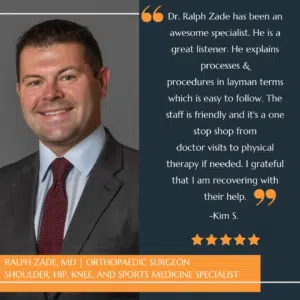
Featured provider: Ralph T. Zade, MD, a board-certified, fellowship-trained orthopedic surgeon and sports medicine specialist at OACM whose specialties include minimally invasive arthroscopic shoulder surgery (per his mdbonedocs.com profile). His profile does not include a personal quote, so this post runs without one rather than using anything fabricated.
What is shoulder replacement?
Shoulder replacement is a procedure in which a surgeon removes damaged surfaces of the shoulder joint and replaces them with artificial components. (AAOS) It’s most often considered for advanced arthritis or for severe damage from injury, when the cartilage that normally cushions the joint has worn away and bone grinds against bone.
There are a few different approaches. A total shoulder replacement resurfaces both the ball and the socket. A reverse shoulder replacement switches the position of the ball and socket components, an approach often used when the rotator cuff is severely damaged. (AAOS) Your surgeon will recommend the approach that fits your anatomy and the condition of your shoulder.
Who is a candidate?
Shoulder replacement is usually considered only after non-surgical options have been tried. You and your provider might discuss it if you have persistent pain that limits everyday activities, pain that disrupts your sleep, loss of motion or strength, and limited relief from medication, injections, or physical therapy. (AAOS) It is not the first move, and it isn’t right for everyone. Age, overall health, activity goals, and the specific condition of your shoulder all factor in, which is why a thorough evaluation with imaging is essential.
What does recovery look like?
Recovery is a gradual, structured process rather than an overnight fix. Many patients wear a sling for a period after surgery and begin guided physical therapy to rebuild motion and strength. (AAOS) The timeline varies from person to person, and full recovery often unfolds over several months. Commitment to rehabilitation matters; many patients experience meaningful relief from the pain that limited them before surgery, along with improved function for daily tasks.
Watch: advances in shoulder surgery
Our visual article walks through modern shoulder surgery in plain language.
WordPress note: paste the YouTube URL on its own line to embed the player inline. Confirm the clip before publishing; swap to another video from the July set if preferred.
Schedule a consultation
If shoulder pain is limiting your daily life and earlier treatments haven’t helped, a consultation can clarify whether replacement is even on the table for you. Schedule with our shoulder specialists at our Eldersburg clinic, or in Catonsville, Columbia, or Fulton, by calling (410) 644-1880 or (855) 4MD-BONE, or book online.
Frequently asked questions
Disclaimer
The information in this article is for educational purposes only and is not a substitute for professional medical advice, diagnosis, or treatment. Always speak with a qualified orthopedic provider about your specific symptoms and medical history. To schedule an appointment with Orthopaedic Associates of Central Maryland, call (410) 644-1880 or visit mdbonedocs.com.
 Webinars
 Podcasts
 Patient FAQs
 Patient Education Videos
 Pain Assessment
 Bone Health Assessment
